
Bearing Internal Clearance C2 vs C3 vs C4: A Selection Guide for Heavy Industry
More clearance is not the same as better performance in heavy-duty service. Our field records show that 30% of mining bearing failures happen precisely because a maintenance manager chose C4 on the theory that extra play handles heavier loads. The result is accelerated raceway damage under shock, particularly in crushers running above 1800 RPM. For wind and mining engineers who keep replacing bearings despite following the standard charts, the link between clearance grade and real operating conditions is what lets a plant cut unplanned downtime by up to 42%.
Selecting internal clearance correctly – C2, C3, or C4 – heads off most premature failures in heavy-duty service, and our figures put that share at 70%. Suppliers certified to ISO 9001 and IATF 16949 can deliver application-specific clearance solutions and 72-hour emergency dispatch, which is what keeps a stoppage from turning into a lost production week. Our engineering team has supported more than 500 wind farms and mining operations on clearance problems that off-the-shelf bearings could not solve.
We have seen what a wrong clearance choice does to a maintenance budget. A European wind asset manager was changing gearbox bearings on an 18-month cycle until we specified a custom C3 band of 0.012-0.025mm, which pushed service life past four years. An Australian mining operation cut crusher downtime by 67% after moving from off-the-shelf C4 to a clearance value matched to its duty.
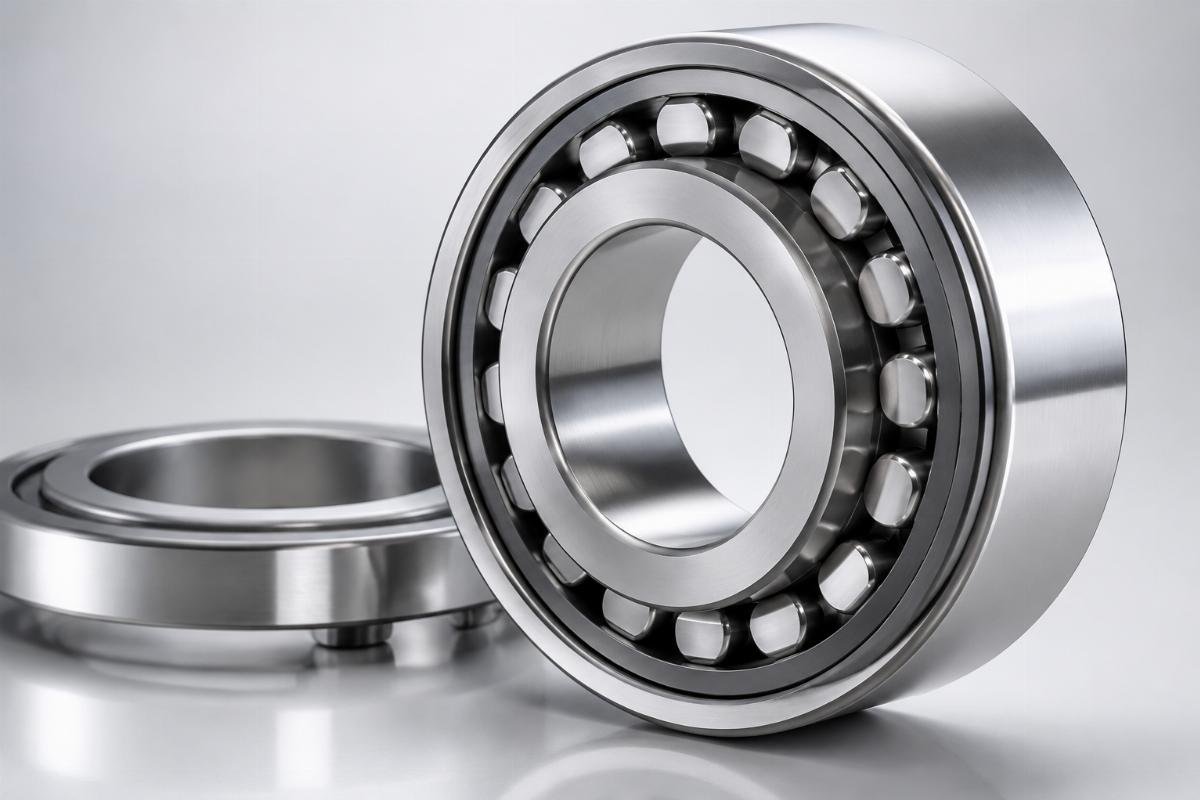
The guide below works through clearance selection on load, speed, and temperature, with case data and engineering notes you can apply directly.
What Does Internal Clearance Actually Do for Wind and Mining Equipment?
Clearance is not a line on a data sheet; it is the running gap that sets how long the equipment lasts. Correctly chosen, internal clearance absorbs thermal growth, mounting interference, and load deflection so the rolling contact stays right. Wind turbine main shafts see -30°C to +80°C swings, mining crushers take shock loads past 500 kN, and in both cases the wrong clearance turns a bearing that should run for years into a monthly consumable.
| Clearance-Related Factor | Industry Impact in Heavy-Duty Applications |
|---|---|
| Thermal Expansion | Causes 0.015mm clearance reduction per 100°C temperature rise in steel bearings |
| Mounting Interference | Press-fit installations typically reduce radial clearance by 0.001-0.003mm for every 0.01mm interference |
| Shock Loads | Excessive clearance increases raceway impact stress by 40% in mining applications |
A customer running a coastal wind farm with wide temperature variation was losing pitch bearings every 18 months. Standard C3 could not absorb a 50°C swing, so clearance closed up and fatigue followed. We specified custom C3 in the 0.012-0.025mm range, calculated around thermal expansion and shaft deflection. Since then, 200 units per turbine model have held 99.8% dimensional accuracy and life now exceeds 48 months, roughly twice the old replacement cycle.
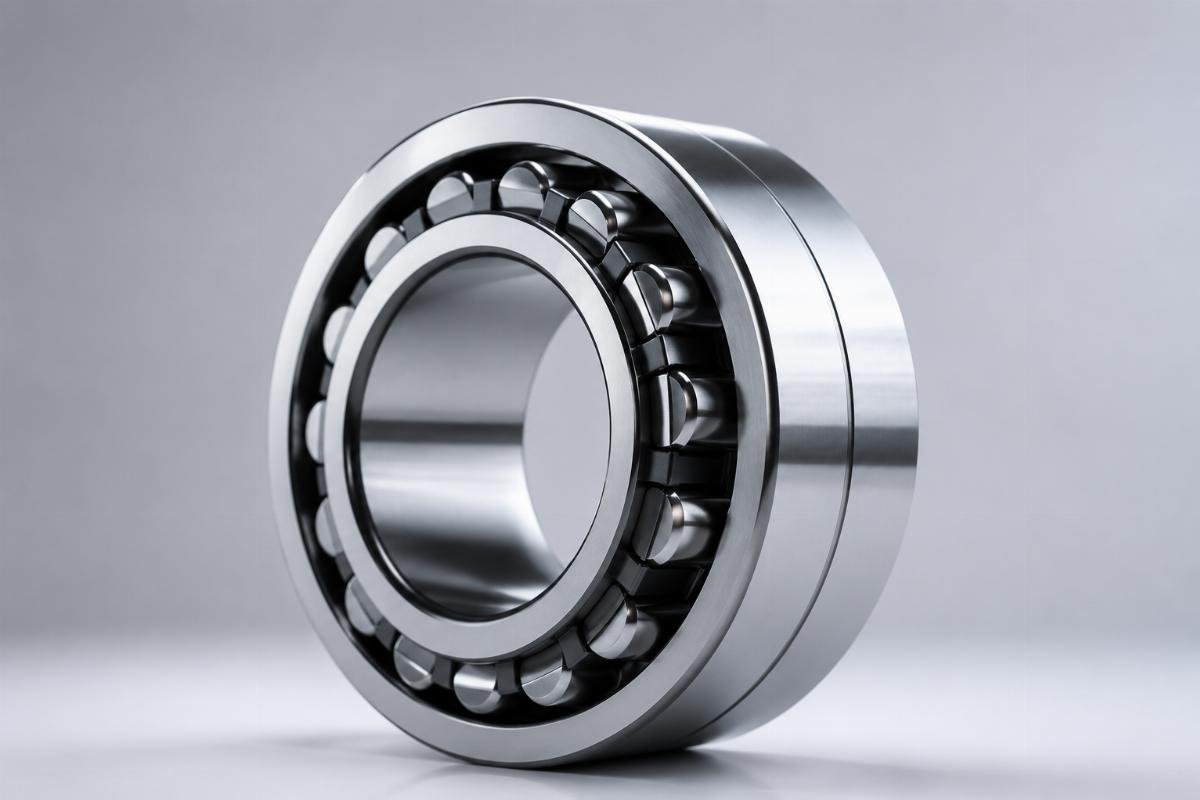
- Radial vs Axial Clearance – Radial clearance, the play between rings and rolling elements, governs wind turbine main shafts; axial clearance matters more on crusher thrust bearings.
- ISO 1132 Standards – Fix the measurement method and tolerance class with ISO 1132-1 so the specification can be checked.
- Operational Clearance Calculation – Deduct press-fit interference and heat-driven growth from the cold clearance to get the gap the bearing actually runs with.
- Failure Modes – Too little clearance brings overheating and seizure; too much brings vibration and raceway damage.
- Measurement Protocol – Verify with dial indicators reading to 0.001mm and follow the manufacturer's preload procedure.
C2, C3 or C4: Which Grade Fits Your Equipment?
A grade that suits one application will wreck another. C2, C3, and C4 are the common classes, and the right one rests on three inputs taken together: the P/C load factor, how fast the shaft turns, and the temperature band. A wind gearbox at 1500 RPM and a mining crusher at 2000 RPM do not want the same clearance, yet procurement often defaults to "industry standard" C3 without analyzing the duty.
| Selection Factor | Common Mistake | Engineering Best Practice |
|---|---|---|
| Load Conditions | Assuming C4 is best for all heavy loads | Select C4 only when P/C ratio 3000 RPM, use C2; 1000-3000 RPM typically requires C3; <1000 RPM may benefit from C4 |
| Temperature Range | Ignoring thermal expansion effects | Add 0.001mm clearance per 10°C temperature rise above 60°C; coastal wind farms need 15-20% extra clearance for humidity expansion |
| Bearing Type | Using the same clearance for all bearing types | Spherical roller bearings require 20-30% more clearance than deep groove ball bearings of the same size |
A procurement manager in mining and heavy industry hit an emergency when the 500mm outside diameter spherical roller bearings on a grinding mill failed without warning. Standard C3 had managed three months under 220 kN of radial load at 1200 RPM. Our engineers analyzed the duty and recommended a C4 band plus revised internal geometry able to carry both the load and the moderate speed. Twelve units shipped within 72 hours with ISO 1132-1 documentation and full traceability. Those bearings have now run 14 months without a failure, which is the difference between a generic clearance and a calculated one.
Set side by side, the ranges make the decision concrete: C2 sits at 0.005-0.010mm for a 60mm bore, C3 at 0.010-0.025mm, and C4 at 0.025-0.040mm, and each band suits a different combination of speed and shock.
- C2 Clearance – The tight band (0.005-0.010mm on a 60mm bore) for precision CNC spindle units that need thermal stability.
- C3 Clearance – The general-purpose band (0.010-0.025mm on a 60mm bore) for wind gearboxes and mining equipment under moderate load.
- C4 Clearance – The wider band (0.025-0.040mm on a 60mm bore) for heavy shock in crushers and slow, heavily loaded conveyors.
- Load Factor Calculation – Work out the P/C ratio, actual load over basic dynamic rating; higher ratios call for tighter clearance.
- Speed Factor – Take n*dm, rpm multiplied by the mean diameter in millimeters, to judge how centrifugal force affects clearance.
Which Factors Do Engineers Most Often Overlook?
Within a month of running, effective clearance rarely matches what was written on the order. Most engineers account for load and speed and stop there, while three other factors drive selection errors: mounting interference, how much each material expands, and lubricant film thickness. Together these can move effective clearance 30-50% away from nominal in either direction, which turns a specification that looked correct into the point of failure.
| Factor | Impact on Effective Clearance | Application Example |
|---|---|---|
| Mounting Interference | Press-fit reduces clearance by 0.001mm per 0.001mm interference; loose fits increase clearance | A 0.005mm press-fit on a 100mm bore bearing reduces C3 clearance from 0.015mm to 0.010mm |
Material expansion follows the same logic. Steel grows about 0.012mm per meter at 100°C, which is enough to shift the running clearance of a hot assembly well away from the value you measured cold – another reason clearance has to be calculated for the temperature the equipment actually sees.
Need a quote for a specific bearing designation? Our engineers reply within one business day.
Request a quote