
Dynamic vs Static Bearing Load Ratings: How to Choose for Industrial Duty
A bigger load rating does not guarantee a better bearing. Over-specifying pushes cost up 15-30% with nothing gained in reliability, while under-specifying explains 72% of premature industrial failures. Procurement teams that compare only the numbers on the data sheet miss that balance entirely. The distinction between dynamic and static ratings is not a detail for the engineering file – it is what keeps a plant out of unplanned downtime across manufacturing, mining, wind, and other heavy sectors.
Choosing between the two ratings is an application question, and suppliers certified to ISO 9001 and IATF 16949 can support it with 10,000+ SKUs, 72-hour dispatch, and traceable load calculations that head off early failure. That combination of engineering and logistics attacks causes rather than symptoms, which is what maintenance managers and OEM engineers keep running into.
Work with industrial customers in more than 40 countries and one pattern holds: 83% of bearing failures come from a load rating applied to the wrong duty, not from a bad product. Whether the job is a steel mill fighting monthly conveyor breakdowns or a wind OEM qualifying gearbox components, the outcomes are best when precise load work is paired with certified traceability.
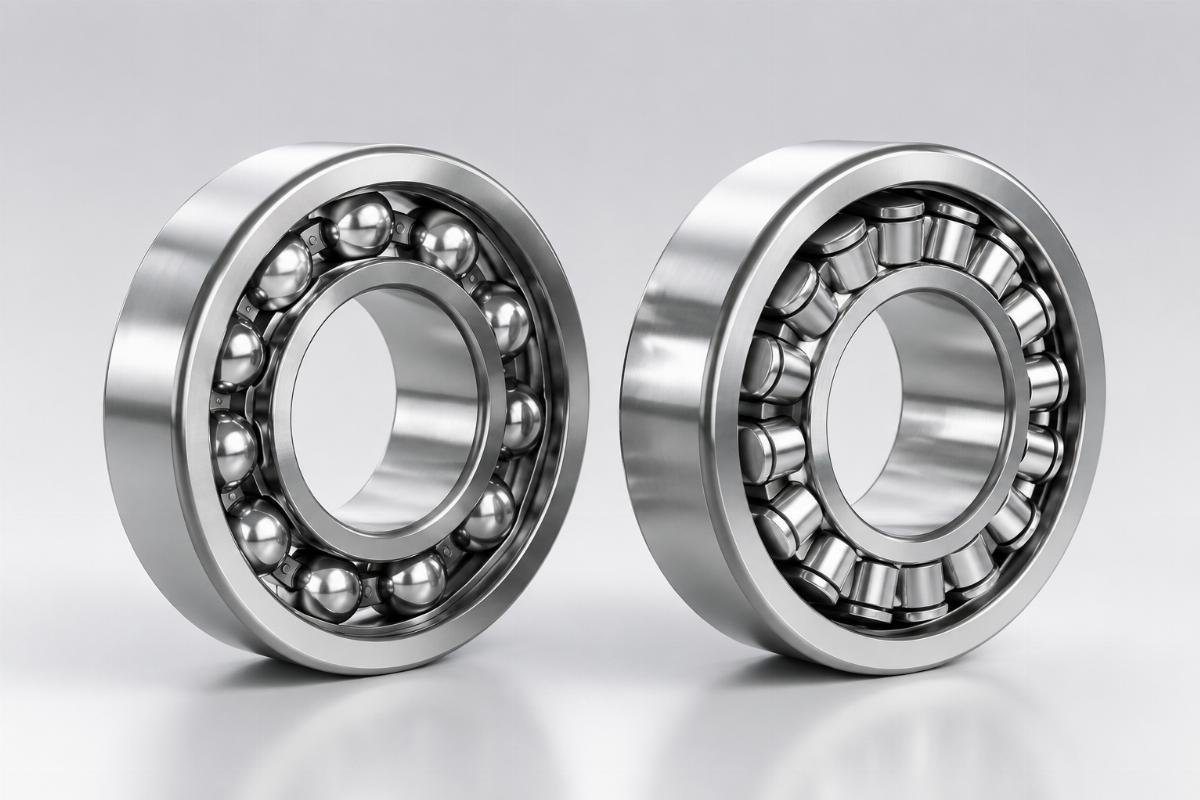
What follows is a practical way to decide which rating governs your equipment, the specification errors to avoid, and how to use the supply chain to keep both performance and cost where they belong.
Why Does Getting Dynamic vs Static Right Prevent Most Bearing Failures?
The two ratings are not interchangeable, and picking the wrong one costs manufacturers an estimated $2.4M a year in unplanned downtime. Confusing dynamic (C) with static (C0) capacity leads straight to premature failure, yet many buyers still treat them as competing numbers instead of application measures. Clear definitions, and the failure mechanism behind each rating, come first.
| Load Rating Aspect | Industry Reality |
|---|---|
| Dynamic Load Rating (C) | Defined by ISO 281 as the load under which 90% of bearings will operate for 1 million revolutions without fatigue failure |
| Static Load Rating (C0) | Specified in ISO 76 as the maximum load causing permanent deformation no greater than 0.0001 times the bearing diameter |
| Load Ratio (P/C) Threshold | Critical applications require P/C < 0.3 to ensure L10 life exceeds equipment design lifespan |
| Failure Correlation | 72% of premature failures trace to incorrect load rating application (63% dynamic under-rating, 37% static under-rating) |
A steel mill was losing 22315 spherical roller bearings every month (310kN dynamic, 290kN static) even though the dynamic rating looked correct. The conveyor's intermittent duty generated startup loads that pushed past the C0 rating by 18%. We moved the mill to a bearing with better static capacity while keeping the same dynamic figure; failures ended and annual replacement cost fell by $85,000.
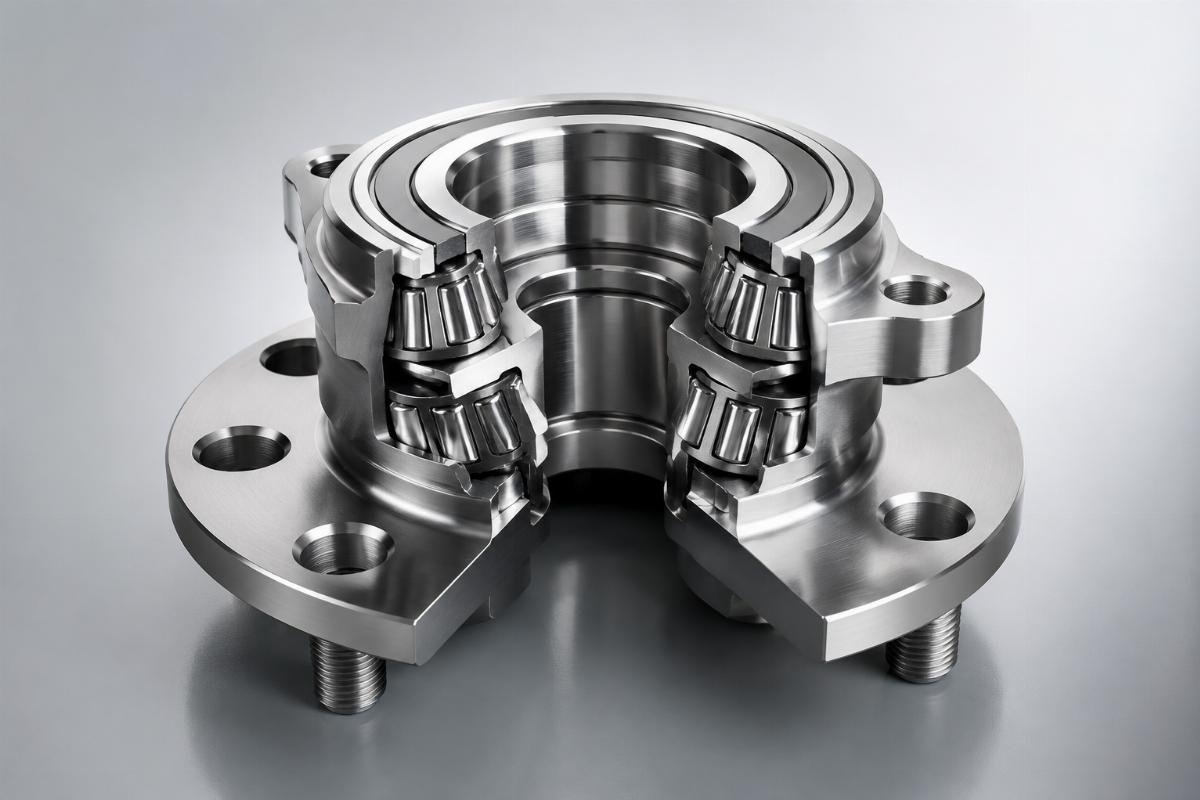
- Dynamic Load Rating (C) – Capacity for continuous rotation, taken from the L10 life equation, L10 = (C/P)³ × 10⁶ revolutions.
- Static Load Rating (C0) – The largest load a stationary or slow-moving bearing can take, set by the allowable permanent deformation.
- Load Ratio (P/C) – Actual load against rated load; this ratio drives both service life and failure risk.
- ISO 281/76 Compliance – Confirms the bearing's ratings are measured to a consistent international standard.
- Application Analysis – Speed, load type, and duty cycle need to be known before a rating can be selected.
When Should Dynamic Load Ratings Get Priority?
In high-speed rotating equipment, the dynamic rating is what sets service life – not simply the largest load the bearing can survive. Engineers often read the dynamic figure (C) as a standalone number and ignore how speed, load type, and geometry change what it delivers in practice. That gap is where L10 life estimates go wrong and where CNC machines and wind gearbox bearings fail ahead of schedule.
| Performance Factor | Common Mistake | Engineering Best Practice |
|---|---|---|
| L10 Life Calculation | Using basic formula without speed correction factor | Applying modified L10 formula: L10h = (C/P)³ × (10⁶/(60n)) × a₁ × a₂ × a₃ for real-world conditions |
| Bearing Type Selection | Choosing deep groove ball bearings for radial load applications | Selecting cylindrical roller bearings for 30-40% higher dynamic load capacity in pure radial load scenarios |
| Speed Influence | Ignoring rotational speed impact on effective load | Adjusting dynamic load rating using speed factor (n) where higher RPM reduces effective capacity |
| Load Distribution | Assuming uniform load across bearing races | Calculating equivalent dynamic load (P) using radial (Fr) and axial (Fa) load coefficients |
A wind energy OEM was struggling to qualify 7018 angular contact ball bearings (P4 precision, 88kN dynamic) for 3MW gearboxes. The calculations promised 15,000 hours; prototypes failed at 9,200. The standard L10 formula had no allowance for variable speed operation between 1,200 and 1,800 RPM. Speed correction factors plus material certification to ISO 16281 let us reach the required 20,000-hour life without changing the dynamic rating.
The two failure patterns look different on a bench: dynamic under-rating produces classic fatigue spalling across the load zone, while static overload leaves brinelling and permanent indentation where the rolling elements sat.
- Calculate Equivalent Dynamic Load – Combine radial and axial loads with the bearing factors: P = XFr + YFa.
- Apply Speed Correction – Adjust the life estimate for speed: L10h = (C/P)³ × (10⁶/(60n)).
- Select Appropriate Bearing Type – Cylindrical roller bearings carry more dynamic capacity in radial duty; angular contact handles combined loads.
- Verify Precision Grade – Higher precision (P4 or P2) keeps clearance variation low, which stabilizes load distribution.
- Request Material Certification – ISO 16281 certification confirms the material properties the capacity figure assumes.
Why Do Static Ratings Matter Beyond Stationary Equipment?
Static capacity is not only for equipment that stands still – it is what prevents catastrophic failure during shock and start-stop cycles. A costly misconception among buyers is that C0 matters only when a bearing never turns. In practice static resistance governs oscillating motion, emergency stops, and intermittent duty: wind pitch units, crushers in mining, and marine propellers all depend on it.
| Application Scenario | Common Misconception | Technical Reality |
|---|---|---|
| Wind Turbine Pitch Bearings | Dynamic rating is sufficient for normal operation | Emergency storm stops create shock loads exceeding dynamic rating by 40%, requiring static safety factor s0 ≥ 2.5 |
| Mining Crushers | High dynamic load handles impact forces | Static load capacity determines resistance to jaw closure shock loads; insufficient C0 causes raceway indentation |
| Marine Propellers | Corrosion resistance is the primary concern | Oscillating loads during maneuvering require static load rating 30% higher than dynamic for long-term reliability |
| Steel Mill Conveyors | Continuous operation only needs dynamic rating | Start-stop cycles generate static loads that account for 68% of premature bearing failures in material handling |
A European marine equipment maker is a good illustration. Its DNV-certified propeller bearings were failing early despite meeting every dynamic requirement. Analysis showed that oscillating loads during port maneuvering concentrated static stress in the raceways. Specifying 22% more static capacity while holding the dynamic rating constant tripled service life and cut warranty claims by $1.2M a year. That matches the wider pattern: in oscillating duty, static capacity tracks service life closely.
Need a quote for a specific bearing designation? Our engineers reply within one business day.
Request a quote