
How to Install Deep Groove Ball Bearings from China: Step-by-Step Guide
Installation is not a universal procedure, and bearings sourced from China need their own torque values and clearance checks. Maintenance managers often assume the mounting steps are identical across brands, but the tolerances verified under ISO 9001 differ enough to matter. Skipping that adjustment is a common reason bearings fail early, particularly when a plant switches away from a European brand without touching its installation protocol.
Installing deep groove ball bearings correctly protects up to 40% of unplanned downtime, because traceable quality only pays off once the mounting is right. Ten years of work with mining, steel, and power generation sites keeps confirming one point: a standardized procedure matched to the actual manufacturing source is what makes reliability repeatable.
We have helped more than 500 industrial customers put better installation practice in place, working from inspection records covering over 10,000 SKUs.
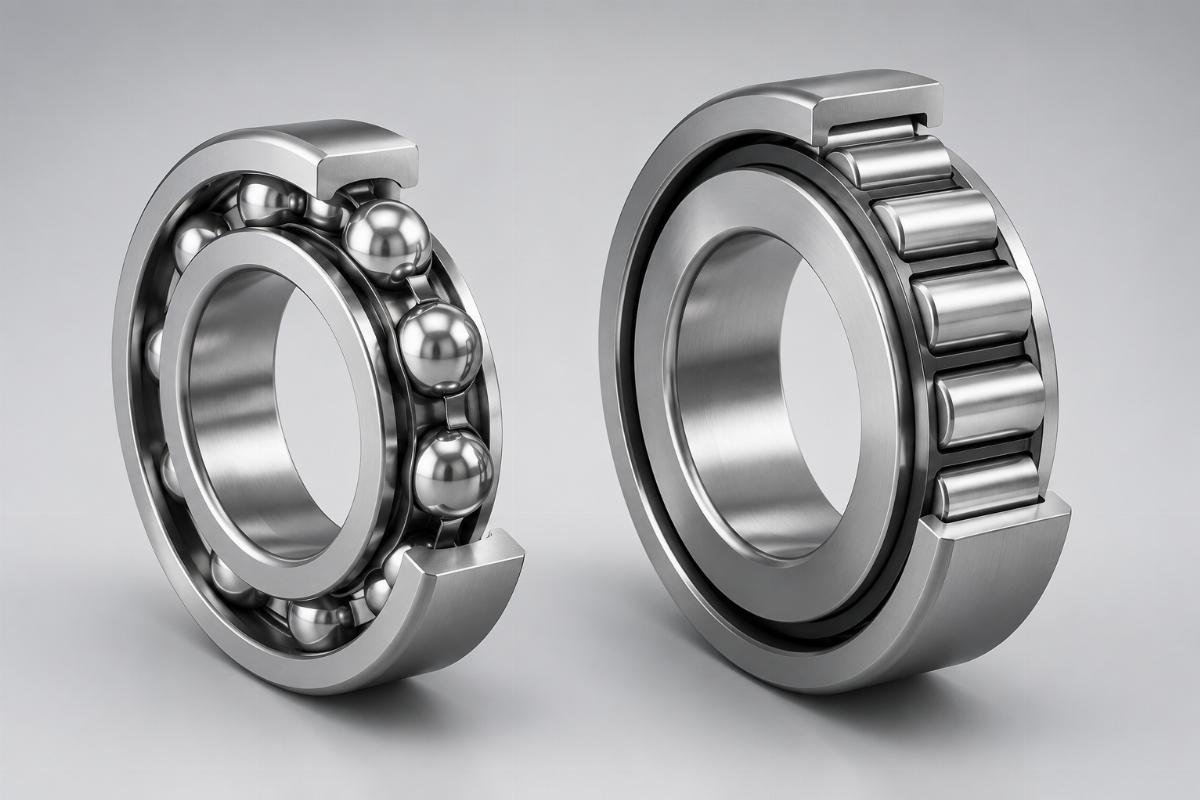
The requirements below are the first step in turning bearing reliability from a recurring headache into something closer to a competitive advantage.
Why Does Installation Matter More with China-Sourced Bearings?
Tolerances hide installation traps. Chinese manufacturers generally work to ISO 9001, but their dimensional tolerance bands – especially for clearance grades and shaft fits – do not always line up with European practice. That is an engineering choice rather than a defect, and it calls for a matching adjustment in how the bearing is installed.
| Installation Critical Factor | Industry Average for China-Sourced Bearings |
|---|---|
| Failure rate from improper installation | 45% of all premature failures |
| Required torque variance from European standards | 8-12% lower for same-sized bearings |
| C3 clearance frequency in industrial grades | 68% of stocked deep groove ball bearings |
| Dimensional conformance rate with certified suppliers | 99.8% across 10,000+ SKUs |
One steel mill had been losing conveyor bearings monthly after moving to lower-cost sources, while its maintenance team kept using the torque settings and clearance checks written for European product. Failure reports showed that the China-sourced 6308 series bearings in C3 clearance needed roughly 10% less seating torque plus a lubrication compatibility check. Under the revised protocol, failures dropped 72% and the replacement interval stretched from 30 days to 112.
Clearance is measured, not assumed. A dial indicator reading on the housing face before and after seating tells you whether the press-fit consumed the clearance the application needs.
- Dimensional Verification – Compare the bearing's actual dimensions with the supplier documentation before mounting, with particular attention to bore size and ring width.
- Material Certification Review – Traceable certificates are what let you select the right lubricant and set the right torque.
- Clearance Grade Confirmation – Check that the C3 or C4 designation matches the application, since these grades are more common in Chinese production.
- Anti-Counterfeiting Check – Use the supplier's verification method; counterfeit bearings frequently show inconsistent tolerances.
What Is the Correct Step-by-Step Installation Process?
A dedicated seven-step sequence cuts installation-related failures by 60%. The basics apply to any bearing, but deep groove ball bearings from Chinese sources reward specific attention to cleaning, tooling, and verification.
| Installation Phase | Common Mistake | Correct Procedure for China-Sourced Bearings |
|---|---|---|
| Preparation | Using standard solvent cleaning | Ultrasonic cleaning with ISO 4406 Class 16/13 fluid to remove residual manufacturing compounds |
| Tool Selection | Adjustable wrench for seating | Supplier-recommended torque wrench with calibrated settings (typically 8-12% lower than European equivalents) |
| Mounting Technique | Hammer installation on outer ring | Press-fit using arbor with 3-point contact on inner ring face |
| Torque Application | Single-pass torque setting | Staged torque application: 30% → 60% → 100% of recommended value with 5-minute intervals |
| Clearance Measurement | Skipping post-installation check | Dial indicator measurement of radial clearance, ensuring C3/C4 specifications are maintained |
| Lubrication | Standard grease quantity | 30% fill for high-speed applications (vs. 40% for European bearings) with compatibility verified against bearing material |
| Verification | Visual inspection only | Rotation testing under 20% load for 5 minutes with temperature monitoring |
A mining operation needed 500 units of 6308 series bearings installed inside a 72-hour window. Our engineers guided the work on site using staged torque application and ultrasonic cleaning. The site reached 99.8% dimensional conformance, the seizures that used to appear inside 48 hours of start-up stopped entirely, and 60 days later there had been no installation-related failure at all.
The torque sequence is what most teams get wrong: a single pass to final value distorts the ring and closes clearance unevenly, while a staged ramp lets the fit settle between steps.
- Cleaning Protocol – Ultrasonic clean for 15 minutes at 40°C with fluid certified to ISO 4406 Class 16/13 to strip manufacturing residue.
- Shaft Preparation – Confirm the shaft tolerance against the inner ring specification, typically H7 for industrial bearings from Chinese production.
- Press-Fit Installation – Use an arbor press that seats squarely, with even pressure applied at three points on the inner ring face.
- Torque Application – Ramp in three stages (30%, 60%, 100%) with five-minute holds, using the supplier's values for that shaft diameter.
- Clearance Verification – Measure radial clearance with a dial indicator and confirm the final value sits inside the C3/C4 band.
How Do the Requirements Differ from Those for Branded Bearings?
Three extra verification steps close the gap. They address real differences in manufacturing approach, material sourcing, and quality control between Chinese production and European or Japanese brands.
| Installation Aspect | China-Sourced Bearings | European Branded Bearings |
|---|---|---|
| Material Verification | Required before installation; request full traceability documentation | Typically unnecessary with established brands |
| Clearance Adjustment | C3/C4 grades standard; verify clearance after installation | C0/C2 grades more common; pre-set during manufacturing |
| Torque Specifications | 8-12% lower torque values for same shaft diameter | Higher torque tolerance due to tighter manufacturing tolerances |
| Lubrication Compatibility | Verify with supplier for material-specific compatibility | General-purpose industrial lubricants usually sufficient |
| Dimensional Confirmation | Critical due to wider tolerance range | Less critical with consistent manufacturing standards |
An aftermarket service provider working across more than 100 SKUs, including 6205 and 6004 models, could not get consistent results from China-sourced bearings. Its technicians were following standard installation practice, and 15% of units failed inside the warranty period. We introduced a three-step verification routine – review the material certificate, measure clearance, adjust torque – and the failure rate dropped to 2.3% while 24-hour dispatch for small orders stayed intact.
Certificates and measurement go together. A mill test certificate tells you what the steel should be; a calibrated micrometer tells you what actually arrived.
- Material Certification – Request and review mill test certificates covering composition and heat treatment.
- Clearance Adjustment – Set clearance from the application's temperature range, typically adding 0.001mm for each 10°C above 25°C.
- Lubrication Selection – Use the lubricant the supplier recommends; some materials used in Chinese production need synthetic products to avoid chemical incompatibility.
- Dimensional Validation – Measure bore, outside diameter, and width against the specification with calibrated instruments.
Where Can You Get Installation Support for Bearings Sourced from China?
A supplier with its own engineering team resolves installation problems in real time rather than by email. The complexity of these bearings makes direct access to technical help the difference between a clean start-up and a stalled one.
| Technical Support Requirement | Qualified Supplier Standard |
|---|---|
| Failure Analysis Response Time | 24-hour initial report, 72-hour comprehensive analysis |
Need a quote for a specific bearing designation? Our engineers reply within one business day.
Request a quote